Öğrencilerimiz Yaren Karya Salman (10 IB D), Ada Niron (9 IB D), Doruk Dönmez (9IBD), Duru Kopan (9IBD), Gülce Bakırcı (9IBD), İnci Onay (9 IB D), Mehmet Ali Hocalar (9IBD), Ahmet Kaan Şen (9IBD), Deniz Kılıç (9 IB C), Ali Alıç (9IBC), Eylül Büyükcan (9 IB C), Cemre Öztürkoğlu (9 IB C) ve Nisan Yalçınkaya (9 IB E), Kimya öğretmenimiz Aylin Sarı danışmanlığında Yunanistan’dan Athens College öğrencileriyle çevrim içi ortamda bir araya geldi. Yaptıkları araştırma, röportaj, fotoğraf ürünlerini onlarla paylaşarak işbirliği içinde çalıştılar. Ardından aşağıdaki makaleyi yazdılar.
Çevrenin Genç Sözcüleri Programı, gençleri çevre sorun ve konularını anlamaya yönelten ve onları bilinçlendirmek amacıyla çevre eğitimi yapan uluslararası bir program. Bu amaçla, 44 ülkeden okulların katıldığı ve çevreyle ilgili haberlerin yer aldığı bir okul ağı oluşturuldu. Eğitim aracı olarak, gençlerin ilgisini çeken, çevre gazeteciliği yöntemi benimsenmiş olup, öğrencilerin bulundukları okul yöresinde çevre sorun ve konularını araştırıp inceleyerek haber nitelikli makale, fotoğraf ve kısa video kaydı üretmeleri teşvik ediliyor. Böylece, gençlere seslerini duyurabilecekleri bir ortam sunularak çevresel haksızlıkları dillendirmeleri, çevresel sorunların yetkililer tarafından düzeltilmesini sağlamak için kamuoyu oluşturmakla birlikte, onlara bazı şeyleri değiştirebilecekleri duygusunu yaşatarak çevreye duyarlı vatandaşlar olarak yetişmeleri hedefleniyor.
Yazdıkları bu makale 25 Nisan Salı günü Çevrenin Genç Sözcüleri Ulusal Koordinasyon Merkezi’ne gönderilecek. Uluslararası yarışma sonuçları ise Haziran sonunda toplanacak uluslararası jüri tarafından belirlenecek. Kazanan okulların çalışmaları Temmuz ayı içinde açıklanacak.
Chic But At What Cost
On February 6th, 2023, Turkish citizens woke up shaken by an earthquake of a magnitude of 7.7 (2). This earthquake said to be “A century’s disaster”, was felt in many other countries like Greece, destroying many households and leaving people without basic needs. People worldwide worked together to provide for the earthquake victims through cloth donations. But the lack of coordination caused more harm than good in the long run by creating waste (8). How can clothes donations cause danger? It’s because the items in our wardrobes and the clothing industry can harm the environment, resulting in the loss of biodiversity.

The variety of species in the ecosystem and genetic diversity among living species is called biodiversity (10). Biodiversity works like an intricate web, to maintain balance and support life (5). Without biodiversity, the United Nations Sustainable Development Goals which aim to ensure human lives, human well-being, access to sanitary water, the protection of ecosystems and marine life would be disrupted, leading to a dysfunctional society (11). Let’s uncover the fashion industries’ impact on biodiversity through a survey conducted at Terakki Tepeören School and Athens College to 100 people (15). Alongside the inputs given on the matter through an interview given by Adamantios Skordilis who is a Chemical Engineer, with a Ph.D. in Environmental Engineering(1).

The first question on our survey was ‘Which type of fabric are your clothing items made of?’ 11 people replied: natural fibers. Unsustainable and unethical usage of natural fibers such as leather boots, leather bags, and fur scarves is mostly the result of the slaughter of certain species for their fur or skin (9). This leads to drastic consequences including the extinction of certain species. Only in the European Union, 12 million animals were killed for trade in 2021 (6).
While the impact of natural fiber is known, cotton seems to be a safe option. This applies to 77 of our friends who answered cotton. Unfortunately, cotton, which holds an abundant share in the fashion market, harmed biodiversity for the past 70 years (14). The fertilizer and pesticide used in cotton production is the main reason for this. They mix up into water sources by rains and irrigation leading to problems in food chains that decrease the fish population and much more. Making sure that the cotton is %100 organic however can be a sustainable option as Skordilis mentioned.
The remaining 12 respondents answered synthetic fabrics with a majority responding 3-4 times a week on our follow-up question “On average, how many times a week do you use the washing machine?” During washing, synthetic fabrics release microfibers that end up in oceans where they remain for centuries. These tiny strands of plastic can also enter the food chain through marine creatures’ consumption and become impossible to avoid in our everyday life. Reports by IUCN suggest that 15% – 31% of marine plastic pollution is due to microfibers released by households and industrial products. Synthetic textiles cause 35% of this pollution (3).
29 people said that they cared about the colors and patterns of the clothing items they purchase. While these qualities attract us, they may be harmful to our future. The toxic dyes release pollutants and hazardous substances into the environment while manufactured, resulting in harm to habitats and aquatic life (4). Skordilis stated that to be sustainable, harmful substances should be avoided during manufacturing and in the product. In addition, there are requirements for usability, color fastness, changes in dimensions during washing and drying, and various social criteria that go beyond the basic working conditions of the International Labour Organisation.
These days companies are eager to earn money by speeding up the fashion cycle. The constant production of new items and the disposal of the so-called old ones result in habitat loss through landfills on average taking 600 aces (12). Landfills release lots of harmful gases and pose serious threats to the environment. To further elaborate, approximately 87% of the total fiber input used for clothing is incinerated or ends up in a landfill (13). 4 of our respondents throw their clothes away when they are no longer in use and therefore, are active in this cruel system of disposal.
With all that being said, there are many things us consumers do and can do to end this cycle of destruction such as:
- like the 12 people who value sustainable clothing, buying from alternative brands with documented sustainable production processes, or buying from second-hand shops (thrift stores).
- prioritizing item quality like 48 people extends the clothes’ life reducing waste. Quality items also encourage manufacturers to produce more durable and long-lasting items of clothing, slowing down the fast fashion cycle.
- While clothes can be thrown in the designated recycling bins and be composted like 3 respondents do, due to factors such as being made of complex, poor, materials and containing fiber or harmful substances the processes are difficult as Skordilis mentioned. Therefore people should acknowledge this fact before trying to recycle their clothes. There are other options like donating as 44 respondents do, handing down to people who are interested like 53 respondents, and repairing the clothes is an option too.
- As Mr. Skordilis pointed out, there can be no bans on the production of products but if the government’s control both the production and companies of textile products in accordance with legislation for both production and consumption or disposal. Also, organizations such as the EU set legislation such as extended producer responsibility(EPR), where the companies that produce take the overall costs of the management from A to Z and after consumption. With EPR, the responsibility for the cost of managing unsold clothes falls on the producers. This is a first step towards reducing waste.
- decreasing the usage of washing machines by avoiding washing small amounts of clothing per wash.
- shifting our mindset from preferring famous brands to 75 people after realizing that buying from famous brands harms the environment the most.

Works Cited
- Adamantios Skordilis: “The effects of fast fashion on the environment.” Interview given on 05 January 2023.
- AFAD: “Kahramanmaraş-Pazarcık’ta Meydana Gelen Deprem Hk. Basın Bülteni–5.” 6 February 2023: https://www.afad.gov.tr/kahramanmaras-pazarcikta-meydana-gelen-deprem-hk-basin-bulteni5 Accessed 1 March 2023.
- Brodde, Kirsten, and Gaby Flores: “What are microfibers and why are our clothes polluting the oceans?” Greenpeace, 2 March 2017. https://www.greenpeace.org/international/story/6956/what-are-microfibers-and-why-are-our-clothes-polluting-the-oceans/ Accessed 16 January 2023.
- Bruno Lellis, Cíntia Zani Fávaro-Polonio, João Alencar Pamphile, Julio Cesar Polonio: “Effects of textile dyes on health and the environment and bioremediation potential of living organisms.” 2019, https://www.sciencedirect.com/science/article/pii/S2452072119300413 Accessed 16 January 2023
- Hancock, Lorin: “What is biodiversity? | Pages | WWF.” World Wildlife Fund, https://www.worldwildlife.org/pages/what-is-biodiversity Accessed 17 January 2023.
- Humane Society International: “The Fur Trade.” https://www.hsi.org/news-media/fur-trade/ Accessed 18 February 2023.
- Hürriyet:“Yol kenarına binlerce kıyafet atıldı, depremzedeler uygun olanları aradı.” 27 February 2023: https://www.hurriyet.com.tr/amp/video/yol-kenarina-binlerce-kiyafet-atildi-depremzedeler-uygun-olanlari-aradi-42226163 Accessed 2 April 2023.
- Kilim Gazetesi: “Organizeli- Müsaadeli ve Hedefe Odaklı Yardımlar Gelmeli.” 9 February 2023: https://kilimgazetesi.de/haber/organizeli-musaadeli-ve-hedefe-odakli-yardimlar-gelmeli-39836.html Accessed 1 March 2023.
- Salerno, Dulce: “Love Animals? Then Quit Fast Fashion.” Dulce Salerno, 9 November 2017, https://dulcesalerno.org/love-animals-then-quit-fast-fashion/ Accessed 17 January 2023.
- Somers, Sienna: “Nature in Freefall: How Fashion Contributes to Biodiversity Loss.” Fashion Revolution, https://www.fashionrevolution.org/nature-in-freefall/ Accessed 17 February 2023.
- Sustainable Development Goals: THE 17 GOALS | Sustainable Development.”https://sdgs.un.org/goals Accessed 17 January 2023.
- Vasarhelyi, Kayla: “The Hidden Damage of Landfills | Environmental Center.” University of Colorado Boulder, 15 April 2021: https://www.colorado.edu/ecenter/2021/04/15/hidden-damage-landfills Accessed 17 January 2023.
- World Bank: “How Much Do Our Wardrobes Cost to the Environment?” 23 September 2019: https://www.worldbank.org/en/news/feature/2019/09/23/costo-moda-medio-ambiente Accessed 18 February 2023.
- World Wildlife Fund: “Cotton | Industries | WWF.” https://www.worldwildlife.org/industries/cotton. Accessed 18 January 2023
- YRE Survey: The Responds of the Survey conducted by Terakki and Athens Collage https://docs.google.com/spreadsheets/d/1BhdMh2dfBgSHdgx-7kNQaLI9dd8fLbk4ChqTxjE_KXA/edit?resourcekey#gid=32909803
]]>
 fikirlerini topluma aktarabilmeleri için makale, fotoğraf ya da video kaydı yoluyla çevre gazeteciliği yapmalarını destekleyen bu program kapsamında “Atık Mı? Çöp Mü?’’ adlı bir makale yazdılar.
Deniz Ela Abul (5A), Lara Aybar (5A), Ece Kükrekol (5B), Duru Güner (5B), Neris İnci Yalçınkaya (5C) ve Saniye Ceren Arslan (5C); Fen Bilimleri öğretmenimiz Saadet Etli danışmanlığında aşağıdaki bu makaleyi yazarken, iklim değişikliğinde kendi tutum ve davranışlarının etkisini görmeyi ve değişime kendilerinden yola çıkarak başlamaları gerektiğini vurgulamayı amaçladılar.
Yazdıkları bu makale 25 Nisan Salı günü Çevrenin Genç Sözcüleri Ulusal Koordinasyon Merkezi’ne gönderilecek. Uluslararası yarışma sonuçları ise Haziran sonunda toplanacak uluslararası jüri tarafından belirlenecek. Kazanan okulların çalışmaları Temmuz ayı içinde açıklanacak.
Atık mı Çöp mü?
Kömür, petrol ve doğal gaz yaktığımızda atmosfere salınan karbondioksit gazı dünyanın ısınmasına yol açıyor. Üretim yaparken ve ürettiklerimizi dağıtırken atmosfere büyük ölçüde karbondioksit gazı salıyoruz. Bu gazlar Güneş’ten gelen ışınları tutarak yeryüzünün daha çok ısınmasına ve sonunda da iklim değişikliğine sebep oluyorlar.
Kömür, petrol ve doğal gaz yandığında ortaya çıkan karbondioksit gazı dünyanın ısınmasına yol açıyor. Üretim yaparken ve ürettiklerimizi dağıtırken bu yakıtları kullandığımız için atmosfere büyük ölçüde karbondioksit gazı salıyoruz. Bu gazlar Güneş’ten gelen ışınları tutarak yeryüzünün daha çok ısınmasına ve sonunda da iklim değişikliğini sebep oluyor.
Geçen yıla göre 1.1 santigrat derece artmış olan Dünya sıcaklığı, bu konuda önlem almazsak 2100’e kadar 3,6 santigrat dereceye ulaşacaktır. Tabii bu iyimser bir bakış açısıyla böyle. Çünkü mevcut durumu koruyamıyor, her gün sanayi alanlarını ve tüketimi artırıyoruz.
Bu sorunun nedenlerini düşündüğümüzde ve bir çözüm yolu aradığımızda günlük yaşantımızda en fazla kullandığımız kağıt atıklardan başlamaya karar verdik. Bazı belediyelerin topladıkları atıkları ayrıştırarak geri dönüştürdüğünü biliyorduk fakat belediyeler bu işlemin çoğunu makineler yoluyla yapıyor.
Peki ya ayrıştırmayı yapan makinelerin harcadığı enerji de doğayı kirletmiyor mu? Elbette kirletiyor. Örneğin sadece Pendik’te bulunan atık ayrıştırma tesisi ayda 8 bin ton ayrıştırma kapasitesine sahip ve bu atıkları ayrıştırarak ilgili fabrikalara yolluyor. Bu miktardaki atığı sizce kaç tonluk bir atıktan elde ediyor olabilirler ya da bu atığı geri kazanmak için ne kadar enerji harcıyorlar? Bu yüzden makineler yerine insanlar ayrıştırmayı desteklerse atmosfere daha az karbondioksit/metan gazı salınır.
Sadece okulumuzun 5. sınıflarında ciddi miktarda kağıt toplama kutuları doluyor ama ne yazık ki bu atıkların tamamı kağıt değil. Neler mi var dersiniz? Gong, Bidolu, plastik ayran kutusu, pet şişeler gibi atıkları kağıt atıkları içinden ayırdık.

Ayrıca kağıt atık kutusuna atılan plastikler, bitmemiş yemekler ve içecekler, kağıtların ıslanmasına ve küflenmesine neden olmaktadır. Islanan veya küflenen kağıtlar geri dönüştürülememektedir. Okulumuzdaki kağıt atık kutularından haftada 4700 g kağıt atık geri dönüştürülebilirken yaklaşık 1000 g atık kağıt küflenerek çöp olmaktadır. Bu yüzden insanlar bir atığı geri dönüşüme atarken ayrıştırmaya dikkat ederek atmalıdır.

Gerçek küresel müzakerelerde de kullanılmış olan iklim sistemi dinamiklerinin bilgisayar simülasyonu olan En-Roads simülasyonu üzerinden edindiğimiz verilere dayanarak söyleyebiliriz ki eğer sadece ormansızlaşmayı şu anki duruma göre yarı yarıya azaltırsak 2100 için beklenen sıcaklık artışını 0.1 santigrat derece düşürebiliriz. Aynı şeyi kömüre de uygularsak bu düşüş toplamda 0.2 derece olur. Başka bir deyişle eğer atık kağıtları daha etkili ayrıştırabilirsek hem kağıt tüketiminden hem de atıkları ayrıştırmak için kullanılan yakıttan büyük oranda tasarruf sağlamış olacak ve iklim değişikliğine bir nebze de olsa da dur diyebileceğiz.
Climate Interactive tarafından geliştirilen En-Roads iklim simülasyon programı enerji arzı, ulaşım, arazi ve endüstri emisyonu gibi birincil enerji kaynaklarının kullanım politikasının ve karbon emisyonlarının küresel sıcaklığa etkisini gösteren bir araçtır.
Bu araç üzerindeki faktörleri artırıp, azaltarak alınan ve uygulanan kararların uzun vadeli iklim üzerindeki etkilerini görebilir ve izlememiz gereken çevre politikasını belirleyebiliriz.


Öncelikle öğrencilerimiz Aslı Beyzadeoğlu (9 IB I), İdil Melis Güvendir (9 IB I), Alya Konca (9 IB H), Ela Kurt (9 IB I), Alya Şirin Yazıcılar (9 IB H), Maya Yalçınkaya (9 IB I) ve Oya Ok’un (10 IB FM G), Kimya öğretmenimiz Seval Dikbaş danışmanlığında ayda iki kez Güney Kore’den Chadwick International Lisesi öğrencileriyle bir araya geldi. Yaptıkları araştırma, röportaj, fotoğraf ürünlerini onlarla paylaşarak işbirliği içinde çalıştılar. Ardından aşağıda yer alan makaleyi yazdılar.
Çevrenin Genç Sözcüleri Programı, gençleri çevre sorun ve konularını anlamaya yönelten ve onları bilinçlendirmek amacıyla çevre eğitimi yapan uluslararası bir program. Bu amaçla, 44 ülkeden okulların katıldığı ve çevreyle ilgili haberlerin yer aldığı bir okul ağı oluşturuldu. Eğitim aracı olarak, gençlerin ilgisini çeken, çevre gazeteciliği yöntemi benimsenmiş olup, öğrencilerin bulundukları okul yöresinde çevre sorun ve konularını araştırıp inceleyerek haber nitelikli makale, fotoğraf ve kısa video kaydı üretmeleri teşvik ediliyor. Böylece, gençlere seslerini duyurabilecekleri bir ortam sunularak çevresel haksızlıkları dillendirmeleri, çevresel sorunların yetkililer tarafından düzeltilmesini sağlamak için kamuoyu oluşturmakla birlikte, onlara bazı şeyleri değiştirebilecekleri duygusunu yaşatarak çevreye duyarlı vatandaşlar olarak yetişmeleri hedefleniyor.
Yazdıkları bu makale 25 Nisan Salı günü Çevrenin Genç Sözcüleri Ulusal Koordinasyon Merkezi’ne gönderilecek. Uluslararası yarışma sonuçları ise Haziran sonunda toplanacak uluslararası jüri tarafından belirlenecek. Kazanan okulların çalışmaları Temmuz ayı içinde açıklanacak.
Disaster Is Not As Far As It Seems: Climate Change And How it Affects Our Local Communities
In 50 years, our planet will look very different from how it is today. This is seemingly inevitable as the greenhouse gas (GHG) effect has already caused a rise in global temperatures to as much as 1.5 degrees Celsius, a result of our planet Earth warming faster than at any point in recorded history (“Causes and Effects of Climate Change”). While countries over the world have been struggling with the issue of global warming in different ways, the implications of climate change have crept up to an extent where we cannot afford to waste any minute.
The greenhouse gas effect is the phenomenon of gasses in the Earth’s atmosphere trapping the Sun’s heat. Renewable energy company Iberdrola states that some of the effects of the
greenhouse effect are migration of species, impact on agriculture and livestock, thawing of
glacial masses, floods, hurricanes, and desertification of fertile areas (“Consequences of the
greenhouse effect” 2023). However, the main cause of the greenhouse effect is anthropogenic activities. Fossil fuels used in factories cause GHG emissions, increasing the amount of unhealthy gas in the atmosphere. The Environmental Protection Agency (EPA) also reports that the emissions from vehicles produce carbon dioxide, a type of greenhouse gas (“Sources of Greenhouse Gas Emissions” 2022).
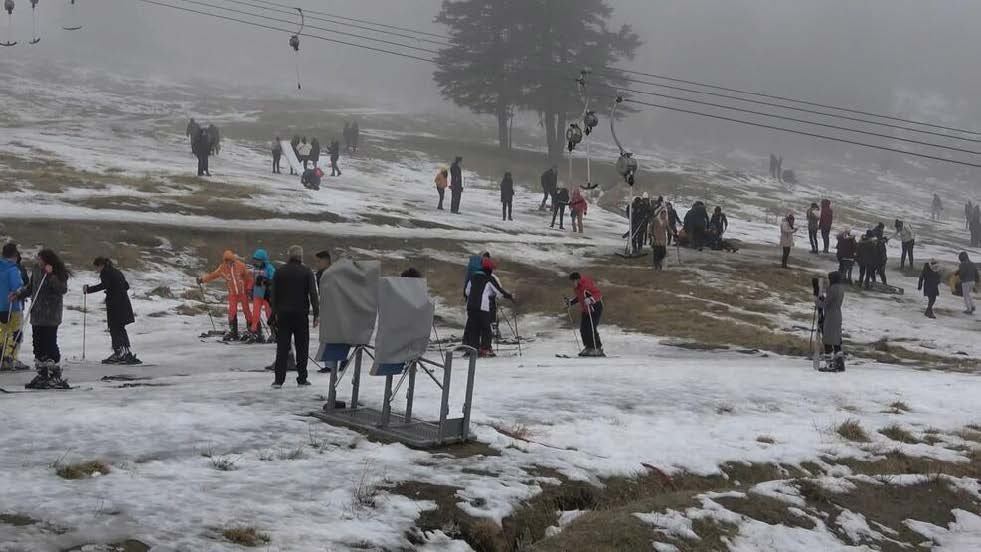
The uncontrollable increase in temperature also triggers unpredictable weather phenomena. Scientists discovered that heating in the polar region ultimately disturbs the polar vortex, a circular pattern of the wind (MacGrath). Not only does this destroy arctic areas and cause the rise in the number of torrential rain but it also increases the number of unpredictable weather phenomena. For example, the difference in the amount of snowfall between rural and urban areas is starting to increase. Many studies have confirmed that rural areas receive up to 60% more snowfall than urban areas. We interviewed Lal C., a 37-year-old engineer living in Turkey. She currently lives in the city of Istanbul/Beşiktaş, but she visits her hometown village Yukarıyongalı in Muş twice a year. She has stressed that the amount of snowfall between her hometown and the city where she lives is critically different, as the city receives almost no amount of snow nowadays.
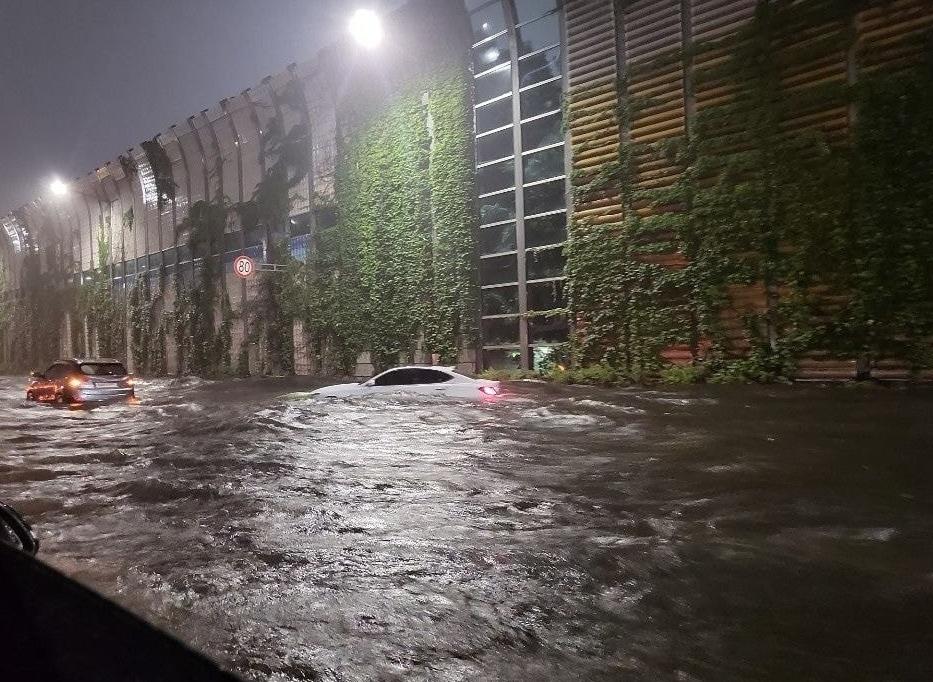
Unpredictable weather phenomena are also significantly impacting Korea’s environment and its inhabitants. For example, in August 2022, the districts of Gangnam, Banpo, and Seocho flooded due to the overflow of the Han River. On August 8th, Seoul recorded the heaviest rainfall in 115 years. Along with thunderstorms, rain flooded infrastructure, subway stations, streets, and apartments, causing power outages, injuries, and the death of at least 8 people by drowning. In Sillim-dong, an entire family was trapped in an underground flat, and in Pohang, a woman lost her life after being trapped underwater in a garage. Even members of our team were severely affected by this phenomenon as the flooding made transportation impossible and communication less accessible.
Some solutions for better preparation for such unpredictable weather phenomena include early warning systems and the construction of shelters. These shelters should be built on higher ground and have stable foundations. Improving drainage systems, especially in urban areas, can also help prevent the build-up of water. Rainwater harvesting or rooftop gardens can help with water storage and flood prevention. If water can be captured either through storage or rooftop gardens, the volume of water on the ground will be reduced. This is an example of UNSDG #11 (Sustainable Cities And Communities), as a more resilient and sustainable city can aid greatly in preparing for future unpredictable weather phenomena.
Reduction in GHG emissions should also come from the waste sector, as landfills and
incineration produce lots of emissions; incineration releases 2.5 times the amount of carbon dioxide used to generate electricity from a coal power plant. In South Korea, a significant problem is the lack of proper waste management. Since 1992, the Sudokwon Landfill in Incheon has been handling all garbage from nearby areas including Seoul and the Gyeonggi Province. However, this has caused an overflow of waste at Incheon and pushed the city’s government to close the landfill from other cities after 2025. Therefore, the government has been planning on searching for incinerator sites as a new method to manage waste in Seoul. A proper method to collect and eliminate waste is necessary because uncontrolled discarding of waste can cause serious issues of land and water pollution. However, as an article by Korean Joongang Daily says, “Nobody wants a garbage incinerator in their backyard” in Seoul, showing the prevalent Not In My Backyard (NIMBY) attitude of the city’s inhabitants.
Since the citizens do not seem to support the implementation of an incinerator, the government has been encouraging other methods such as upcycling. On June 25th, 2022, members of our team visited the Seoul Upcycling Plaza to learn more about the benefits of upcycling and its impacts on waste management. We concluded that upcycling reduces both the need for new materials and waste. Running a government program to expand access to upcycling is necessary to make these effective waste management methods feasible for the general public. Companies should also reduce unnecessary waste from their production operations and modify designs to minimize waste created from their products or services. One successful case is from the South Korean dairies company, Maeil Dairies Co., which removed the plastic straws from their drinking yogurt product due to citizens’ demand for waste reduction. Therefore, the advocacy of UNSDG #12 (Responsible Production And Consumption) should come from the citizens, the producers, and the government for a more effective and sustainable waste management system.
In conclusion, climate change is impacting our local communities in numerous ways such as
frequent unpredictable weather phenomena and waste management issues. As climate change worsens, collaborative climate action will be extremely important to prevent the exacerbation of the already-existing environmental problems, which is why UNSDG #13, Climate Action, should be emphasized in both our local and global communities. Each and every individual action counts, so start with one small action for the climate today!


Works Cited
“Climate Change Indicators: Greenhouse Gases | US EPA.” Environmental Protection Agency, 1 August 2022, https://www.epa.gov/climate-indicators/greenhouse-gases. Accessed 9 February 2023.
“Don’t Talk Trash About South Korea’s Waste Management System.” Vincent Au,
https://vinceau.medium.com/dont-talk-trash-about-south-korea-s-waste-management-system-7a11e15ff0e1. Accessed 17 March 2023.
“Greenhouse Gas Emissions from Agriculture in Europe.” Www.eea.europa.eu,
www.eea.europa.eu/ims/greenhouse-gas-emissions-from-agriculture.
Gibson, Jenna, and Catherine Putz. “Seoul’s Trash Crisis – The Diplomat.” The Diplomat,
https://thediplomat.com/2021/05/seouls-trash-crisis/. Accessed 17 March 2023.
Hickman, Leslie. “The Road to a Plastic-Free Society: Korea’s Fight Against Plastic Waste.” Asia Society, 27 April 2022, https://asiasociety.org/korea/road-plastic-free-society-koreas-fight-against-plastic-waste. Accessed 17 March 2023.
“Incheon trashes Greater Seoul’s landfill hopes.” The Korea Herald, 20 July 2021,
https://www.koreaherald.com/view.php?ud=20210720000790. Accessed 17 March 2023.
Jay, Allyson. “Why Is Weather so Incredibly Unpredictable?” The Spectrum, 7 Dec. 2020,
www.blakespectrum.org/blog/2020/12/07/why-is-weather-so-incredibly-unpredictable/.
McGrath, Matt. “Climate Change: Arctic Warming Linked to Colder Winters.” BBC News, 2 Sept. 2021, www.bbc.com/news/science-environment-58425526.
Nunez, Christina. “Carbon Dioxide in the Atmosphere Is at a Record High. Here’s What You Need to Know.” National Geographic, National Geographic, 13 May 2019,
www.nationalgeographic.com/environment/article/greenhouse-gases.
“Preliminary US Greenhouse Gas Emissions Estimates for 2022.” Rhodium Group, 10 January 2023, https://rhg.com/research/us-greenhouse-gas-emissions-2022/. Accessed 9 February 2023.
“Republic of Korea.” G20 Climate Risk Atlas, https://www.g20climaterisks.org/republic-of-korea/. Accessed 17 March 2023.
Roh, Joori. “Record rain leaves at least 8 dead in South Korean capital.” Reuters, 9 August 2022, https://www.reuters.com/world/middle-east/record-rain-leaves-least-7-dead-skorean-capital-2022-08-08/. Accessed 17 March 2023.
Se, Kim. “’Incheon airport, Haeundae Beach will be underwater by 2030.’” The Korea Times, 13 August 2020, http://www.koreatimes.co.kr/www/nation/2021/03/371_294350.html. Accessed 17 March 2023.
Stanford University. “Why Warming Makes Weather Less Predictable.” Stanford News, 14 Dec. 2021, news.stanford.edu/2021/12/14/warming-makes-weather-less-predictable/.
Se, Kim. “’Incheon airport, Haeundae Beach will be underwater by 2030.’” The Korea Times, 13 August 2020, http://www.koreatimes.co.kr/www/nation/2021/03/371_294350.html. Accessed 17 March 2023.
SU-MIN, LEE. “Nobody wants a garbage incinerator in their back yard.” Korea JoongAng Daily, 21 July 2022, https://koreajoongangdaily.joins.com/2022/07/21/national/socialAffairs/Korea-landfill-incinerator/2022072 1191719862.html. Accessed 17 March 2023.
“The Consequences of the Greenhouse Effect: From Desertification to Floods.” Iberdrola, 2022, www.iberdrola.com/sustainability/greenhouse-effects-consequences-and-impacts.
United Nations. “Causes and Effects of Climate Change.” United Nations, United Nations, 2022, www.un.org/en/climatechange/science/causes-effects-climate-change.
US EPA, OAR. “Sources of Greenhouse Gas Emissions.” US EPA, 29 Dec. 2015,
www.epa.gov/ghgemissions/sources-greenhouse-gas-emissions#t1fn2.
“What Are Greenhouse Gases? | National Grid Group.” Www.nationalgrid.com,
www.nationalgrid.com/stories/energy-explained/what-are-greenhouse-gases#:~:text=Greenhouse%20gases %20. Accessed 8 Feb. 2023.
“Why Is the Weather so Unpredictable? | the Children’s Museum of Indianapolis.” Www.childrensmuseum.org, www.childrensmuseum.org/blog/why-weather-so-unpredictable.
YouTube, https://www.koreatimes.co.kr/www/nation/2023/03/281_295669.html. Accessed 17 March 2023. “갑자기 너무 추워진 날씨.. 주기적으로 올 급격한 추위 유의해야.” BBC, 30 November 2022, https://www.bbc.com/korean/news-63805091. Accessed 17 March 2023.
]]>Öğrencimize çalışmasında Kimya öğretmenimiz Dr. İlkay B. Ataç Özdemir rehberlik etti. 11-14 Yaş ve 15-18 Yaş kategorisi ve alt kategorilerden (röportaj, kampanya, 3-5 fotoğraf serisi gibi) toplam 118 fotoğrafın değerlendirildiği yarışmada alınan dereceler, Çevrenin Genç Sözcüleri’nin Ulusal Koordinasyonu tarafından 6 Haziran’da düzenlenen çevrim içi törenle duyuruldu.
Çevrenin Genç Sözcüleri Programı’nda* gençler; çevre sorunları üzerine görüş ve fikirlerini topluma aktarabilmek için makale, fotoğraf ya da video kaydı yoluyla çevre gazeteciliği yapıyor. Programda öğrencilerin iletişim, liderlik, eleştirel analiz ve sosyal sorumluluk becerileri destekleniyor. Öğrenciler, ortaya koydukları ürünlerde Sürdürülebilir Kalkınma Amaçları’nı da ele alıyor.
*Çevrenin Genç Sözcüleri Programı gençleri çevre sorun ve konularını anlamaya yönelten ve onları bilinçlendirmek amacıyla çevre eğitimi yapan uluslararası bir program. Bu amaçla, 44 ülkeden okulların katıldığı ve çevreyle ilgili haberlerin yer aldığı bir okul ağı oluşturuldu. Eğitim aracı olarak, gençlerin ilgisini çeken, çevre gazeteciliği yöntemi benimsenmiş olup, öğrencilerin bulundukları okul yöresinde çevre sorun ve konularını araştırıp inceleyerek haber nitelikli makale, fotoğraf ve kısa video kaydı üretmeleri teşvik ediliyor. Böylece, gençlere seslerini duyurabilecekleri bir ortam sunularak çevresel haksızlıkları dillendirmeleri, çevresel sorunların yetkililer tarafından düzeltilmesini sağlamak için kamuoyu oluşturmakla birlikte, onlara bazı şeyleri değiştirebilecekleri duygusunu yaşatarak çevreye duyarlı vatandaşlar olarak yetişmeleri hedefleniyor.

Kimya Bölümü öğretmenlerimiz Seval Dikbaş, Aynur Hünerli Doğan ve İlkay Özdemir danışmanlığında yürütülen bu program dâhilinde öğrencilerimiz, uluslararası işbirliği kurarak belirli çevre sorunları üzerinde araştırmalar yaptı ve eşleştikleri liselerle birlikte çalıştı. Uluslararası işbirliğiyle yaptıkları çalışmaların ürünü olarak yazdıkları makalelerle program dâhilinde düzenlenen “Young Reporters for The Environment” adlı uluslararası makale yarışmasına katıldılar. Hazırlanan makaleler 26 Nisan Salı günü Çevrenin Genç Sözcüleri Ulusal Koordinasyon Merkezi’ne gönderilecek. Uluslararası yarışma sonuçları ise Haziran sonunda toplanacak uluslararası jüri tarafından belirlenecek. Kazanan okulların çalışmaları 10 Temmuz’da açıklanacak.
Levent Yerleşkemizden öğrencilerimiz Portekiz’den Escola Secundária D. Sancho lisesiyle eşleştiler ve “Dere İslahı: Kasımpaşa Deresinin İslah Edilmesi” konusunda makalelerini yazdılar. Tepeören Yerleşkemizden öğrencilerimiz ise Slovenya Gimnazija In Srednja Sola Rudolfa Maistra Kamnik lisesiyle eşleştiler ve “İklim Değişikliğinin Etkileri: Türkiye’deki Orman Yangınları, Slovenya’daki Don Olayları” makalelerini yazdılar.
Öğrencilerimiz bu makaleleri yazabilmek için ayda iki kez bir araya geldi, araştırma, röportaj, fotoğraf ürünlerini paylaşarak işbirliği içinde çalıştılar.
Ayrıca 9IB E sınıfından Yaren Karya Salman Çevrenin Genç Sözcüleri’nin düzenlediği foto röportaj alanında “The Story of Polluted Waters: Mucilage in the Marmara Sea” isimli makalesiyle ulusal Yarışmaya bireysel olarak katıldı.
Yarışmaya katılan öğrencilerimiz: Tepeören Yerleşkemizden İdil Kurtkaya (9IBC), Sakina Imanova (9IB D), Sena Akhisar (9IB D), Nehir Bayer (9IBD); Ekin Raşa (9IB E), Elif Doğan (9IB E), Yaren Karya Salman (9IB E), Demir Özbek (10IB D), Mehmet Ali Kantarcı (10IB E), Nehir Kale (9IB E); Levent yerleşkemizden Işık Ulus (9IB E), Oya Ok (9IBG), Elif Demir (9IB H), Neva Zeynep Kanatlı (9IBE), Ege Bilmece (9IBE), Sarp Hergün (9IBE).
*Çevrenin Genç Sözcüleri Programı gençleri çevre sorun ve konularını anlamaya yönelten ve onları bilinçlendirmek amacıyla çevre eğitimi yapan uluslararası bir program. Bu amaçla, 44 ülkeden okulların katıldığı ve çevreyle ilgili haberlerin yer aldığı bir okul ağı oluşturuldu. Eğitim aracı olarak, gençlerin ilgisini çeken, çevre gazeteciliği yöntemi benimsenmiş olup, öğrencilerin bulundukları okul yöresinde çevre sorun ve konularını araştırıp inceleyerek haber nitelikli makale, fotoğraf ve kısa video kaydı üretmeleri teşvik ediliyor. Böylece, gençlere seslerini duyurabilecekleri bir ortam sunularak çevresel haksızlıkları dillendirmeleri, çevresel sorunların yetkililer tarafından düzeltilmesini sağlamak için kamuoyu oluşturmakla birlikte, onlara bazı şeyleri değiştirebilecekleri duygusunu yaşatarak çevreye duyarlı vatandaşlar olarak yetişmeleri hedefleniyor.
]]>